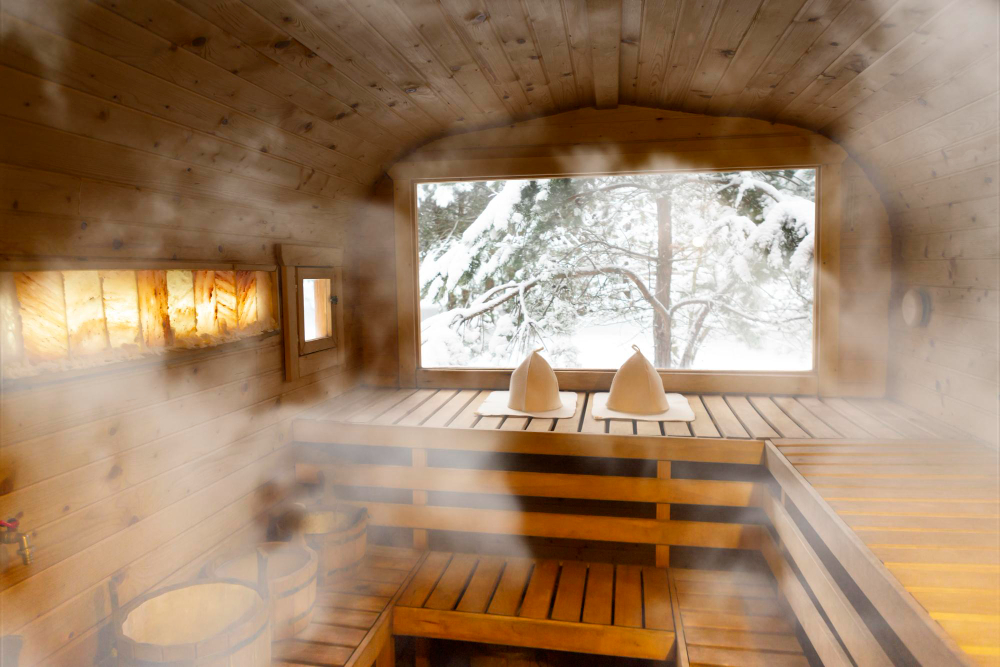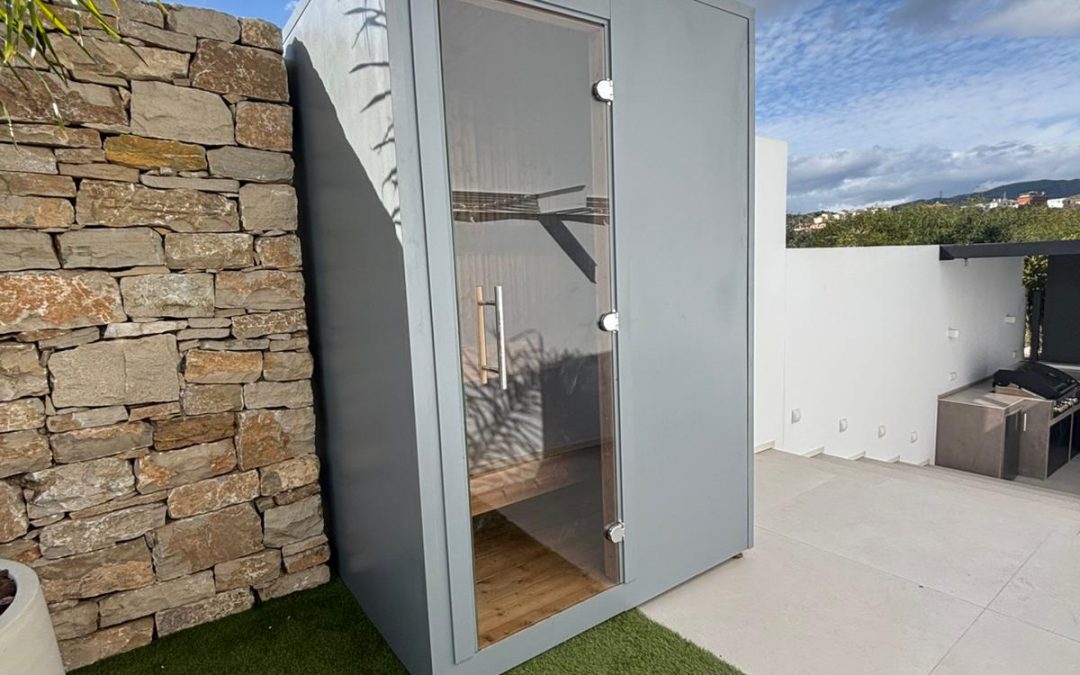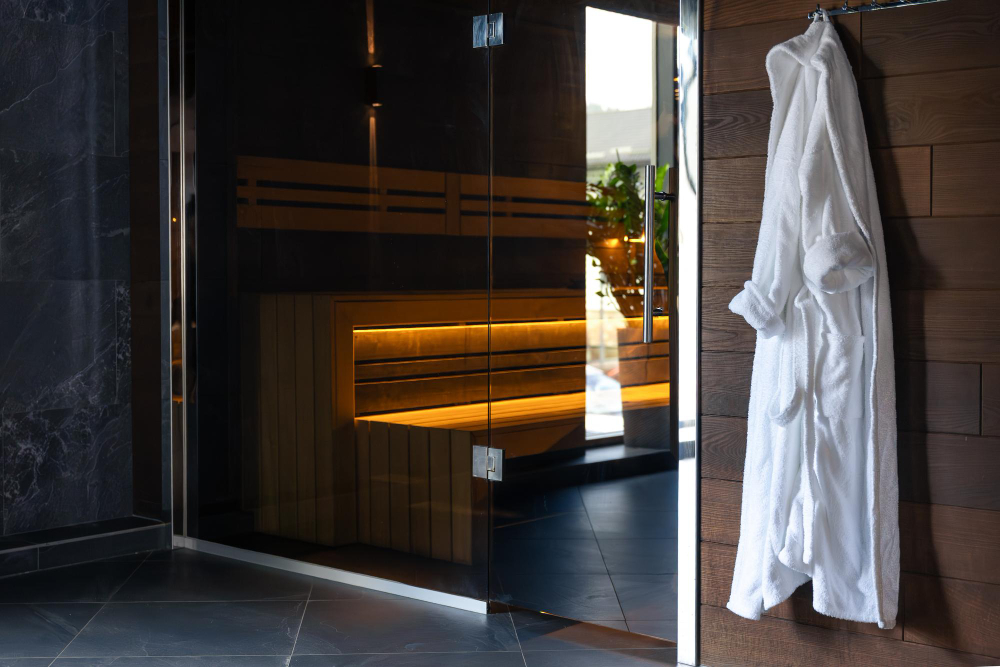
Home saunas make it possible to create a private, comfortable relaxation space that is available at any time. There is no longer any need to travel to a gym, spa, or wellness centre to enjoy a heat session: a well-designed installation can be integrated into a bathroom, bedroom, basement, terrace, or even the garden.
In addition to providing convenience, a home sauna allows each session to be adapted to the preferences of its users. The temperature, duration, lighting, and time of day can all be selected freely, without schedules or waiting times.
Today, solutions are available for homes of different sizes. From compact single-person cabins to family-sized indoor or outdoor installations, the design can be adapted to the available space and the style of the property.
Why Install a Sauna at Home?
Having your own sauna turns wellness into an accessible routine. Instead of booking a session or planning a journey, you simply need to switch on the equipment and wait for it to reach the appropriate temperature.
This availability encourages more regular use. The sauna can be used after exercise, at the end of the working day, or during the weekend, provided that usage recommendations and each user’s personal circumstances are taken into account.
It also offers greater privacy. Each person can enjoy the session at their own pace, without sharing the facilities with strangers and while maintaining direct control over the cleanliness and maintenance of the cabin.
Benefits of Having a Sauna at Home
Sauna use is mainly associated with a feeling of relaxation, thermal comfort, and rest. Exposure to heat produces a temporary physiological response, such as increased sweating and greater blood flow to the skin.
Its effects may vary depending on the temperature, session duration, type of sauna, and each person’s state of health. A sauna should not be presented as a medical treatment and does not replace the advice of a healthcare professional.
Relaxation and Reduction of Daily Tension
The warm and peaceful environment helps users disconnect from their daily responsibilities. The absence of noise, the comfort of the wood, and the soft lighting encourage a mindful break within the home.
Using the sauna at the end of the day can become a relaxing ritual. In addition, having one at home avoids the time and stress associated with travelling.
Recovery After Physical Activity
Heat can help temporarily relax the muscles and reduce the feeling of stiffness after exercise. For this reason, many people include sauna sessions in their post-workout routine.
However, it is important to stay properly hydrated, avoid excessively long sessions, and wait an appropriate amount of time after intense physical activity.
What Type of Home Sauna Should You Choose?
The choice depends on the type of heat experience you are looking for, the available space, the electrical installation, and the expected frequency of use.
The two most common options are Finnish saunas and infrared saunas. Although both generate heat, they operate differently and provide different sensations.
Finnish Saunas
Finnish home saunas use a heater that warms the air and special sauna stones. They usually operate at high temperatures and low relative humidity, although small amounts of water can be poured over the stones to create bursts of steam.
This system provides the most traditional experience: intense heat, a wooden cabin, and sessions followed by a cooling-down phase. In a dry sauna, temperatures usually range from approximately 80 to 110°C, with low humidity levels.
A Finnish sauna requires the correct heater output, suitable ventilation, proper insulation, and an electrical installation designed for the equipment. Further information about its features is available in the bespoke Finnish sauna section.
Infrared Saunas
Infrared home saunas use emitting panels that transfer heat directly to the body, without needing to raise the air temperature as much.
They usually operate at more moderate temperatures, approximately between 45 and 60°C, and can reach suitable operating conditions more quickly than many traditional systems.
They are therefore an interesting option for people who prefer a gentler heat sensation, want shorter sessions, or have limited space. The bespoke infrared sauna page provides further information about their design and installation options.
Practicality and Efficiency of a Home Sauna
The efficiency of a sauna does not depend solely on the type of heater. It is also influenced by the volume of the cabin, the insulation, the quality of the door, the installed power, and the length of time the sauna remains switched on.
A cabin adapted to the usual number of users avoids heating an unnecessarily large space. Similarly, good insulation helps the sauna reach its operating temperature more quickly and retain it throughout the session.
It is not always necessary to have an entire room available. A single-person sauna can be integrated into a compact area, while a family installation will require a larger cabin and a suitable bench layout. To optimise performance, it is advisable to choose a power output that matches the cabin volume, close the door properly, keep the insulation in good condition, and avoid preheating the cabin for longer than necessary.
A home sauna requires simple but regular care. After each session, it is advisable to ventilate the cabin, allow the benches to dry, and remove any remaining moisture.
It is also advisable to place a towel over the wood, clean the surfaces with suitable products, and periodically check the condition of the heater, connections, and control components. Professional maintenance helps identify wear, electrical problems, or insufficient ventilation before they affect the operation of the installation.
Where Can a Sauna Be Installed at Home?
A sauna can be installed either inside or outside the property.
Indoors, the most common locations include large bathrooms, bedrooms, private gyms, basements, and wellness rooms. The room must allow for proper ventilation and have the necessary connections.
Outdoors, it can be integrated into a terrace, porch, pool area, or garden. In these cases, the structure must be designed to withstand humidity, sunlight, rain, and changes in temperature.
Outdoor installations offer greater design freedom and make it possible to create an independent wellness space. Saunas Dominique offers bespoke outdoor sauna solutions for gardens and terraces.
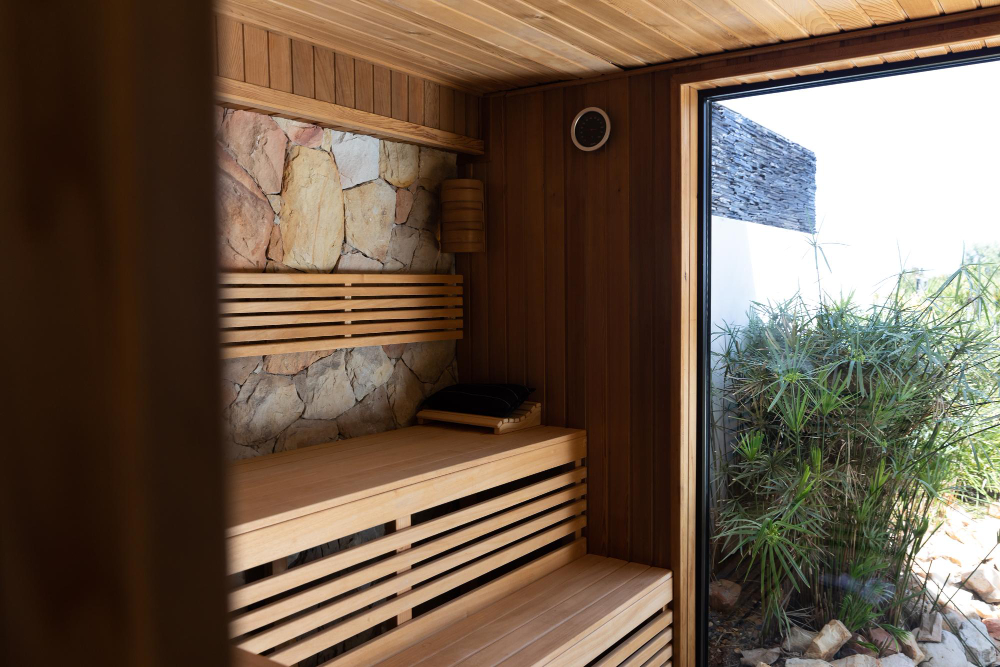
Bespoke Saunas by Saunas Dominique
Every home has different dimensions and requirements. For this reason, a bespoke sauna makes better use of the available space and allows its layout, capacity, materials, and equipment to be selected with precision.
Our projects can be adapted to indoor spaces, gardens, and terraces, using either Finnish or infrared systems. The design can include benches at different heights, lighting, glass doors, customised finishes, and accessories selected for each user.
Compared with a standard solution, a bespoke sauna makes it possible to adjust the power output and cabin volume, integrate the sauna into the existing interior design, and correctly address technical aspects such as ventilation and insulation.
The result is a comfortable, efficient space designed to be used for many years, supported by a team that can also provide maintenance and technical assistance.
Frequently Asked Questions About Home Saunas
How Much Space Is Needed to Install a Sauna?
It depends on the number of users and the type of cabin. Compact single-person solutions and larger family models are available. A bespoke project can make use of corners, sloping ceilings, or spaces with unusual dimensions.
Which Sauna Uses Less Energy?
Infrared saunas usually operate at lower temperatures and require less heating time. However, final energy consumption depends on the power output, insulation, duration of each session, and frequency of use.
Is a Finnish Sauna Better Than an Infrared Sauna?
Neither option is better in every situation. A Finnish sauna provides more intense heat and a traditional experience. An infrared sauna operates at more moderate temperatures and usually heats up more quickly. The choice depends on the user’s preferences and the characteristics of the property.
Does a Home Sauna Require a Lot of Maintenance?
It does not require complex daily maintenance. The sauna should be ventilated, the wood should be kept dry, and the benches should be cleaned with suitable products. Periodic inspections of the electrical installation, heater, and control systems are also recommended.